Initial draft · 03:35
Start with something to inspect.
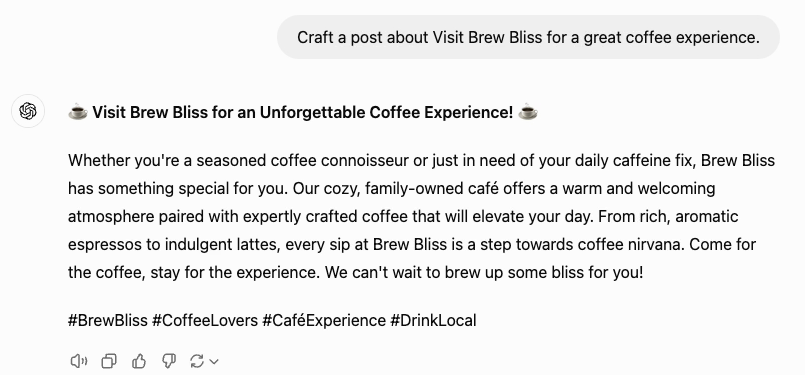
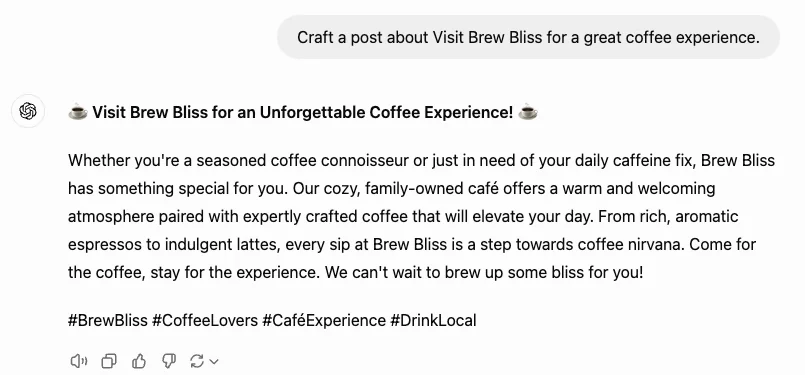
The short request names the café and the purpose. The response supplies a warm invitation. It also adds business details the prompt did not establish.

Kyle Hobson

Work, learn, make, or explore something new.
A few paths. Plenty to discover.

Coursera · Guided Project
A published Coursera project guides beginners through making prompts more specific, comparing outputs and refining a draft.
Beginners need more than an example prompt to copy. They need a way to decide what context to add, how to inspect the result, and what to change when it does not serve the task.
I created and taught ChatGPT 4o for Beginners: Create Social Media Content, a one-hour guided project. I used a concrete content-creation task to walk learners through making prompts more specific, comparing outputs, refining drafts, and organizing a weekly content calendar.
Creating a social post provides a concrete starting point: there is an audience, a message, and a purpose. The lesson begins with a simple café example and an initial AI-generated draft, giving learners something specific to inspect and revise.
Initial draft · 03:35
The short request names the café and the purpose. The response supplies a warm invitation. It also adds business details the prompt did not establish.
Revision request · 03:35
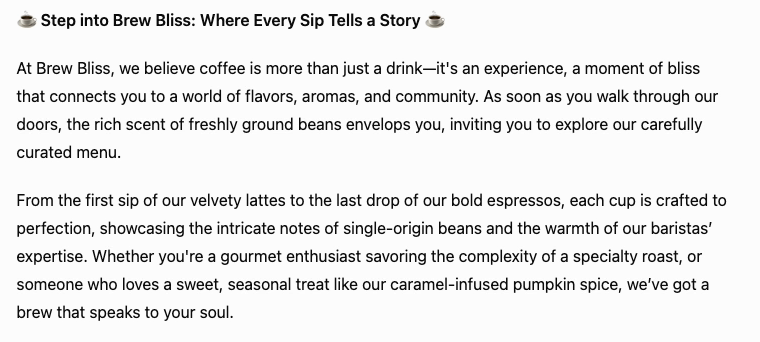
The next instruction asks for sensory detail and a friendly, inviting tone. Those qualities give the learner something specific to look for in the next draft.

Changed output · 04:00
The revised draft adds a scene, coffee descriptions and audience cues. It is also longer. Specific claims about the café still need checking against the brief.
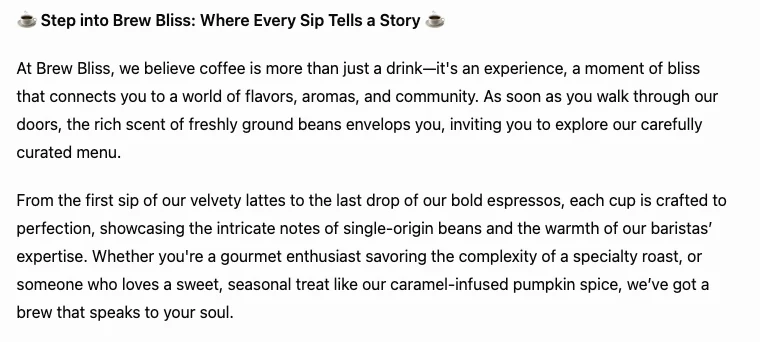
One sequence from my original Coursera lesson. The first request, revision being prepared, and subsequent output are recorded evidence; added café details are fictional practice material, not verified business facts.
I start with a familiar café-post task, show the first draft, and make the next instruction visible. The learner can follow what changed before deciding whether the new draft serves the goal.
Beginning with a fully specified prompt would hide the decisions that make the instruction useful. This example keeps the first request simple, then makes the revision visible.
The familiar subject lowers the barrier to practice, but it is still a fictional scenario. The model’s claims about the café need to be treated as generated draft material rather than verified business facts.
The lesson goals ask learners to create a draft, make iterative refinements, and examine how each change affects quality and alignment with the goal. The practice is in comparing and revising, so learners have a way to continue when the first result is only a starting point.
The revision produces more vivid language, but it also adds specific coffee claims and more text to edit. I want learners to compare the answer with the brief and the intended post, rather than reward detail just because it sounds polished.
A request to simply make the draft better leaves the desired change open. The visible revision makes several of those preferences explicit and adds coffee-audience context.
Adding context changes both the description and the amount of text. The second output gives the learner more specific material, but it also creates more detail to verify and a longer draft to edit for the intended platform.
The task summary brings the activity back to a repeatable cycle: draft, review, refine, and check against the goal. The wider project carries the work into a weekly content calendar, connecting prompt practice to an organized output.
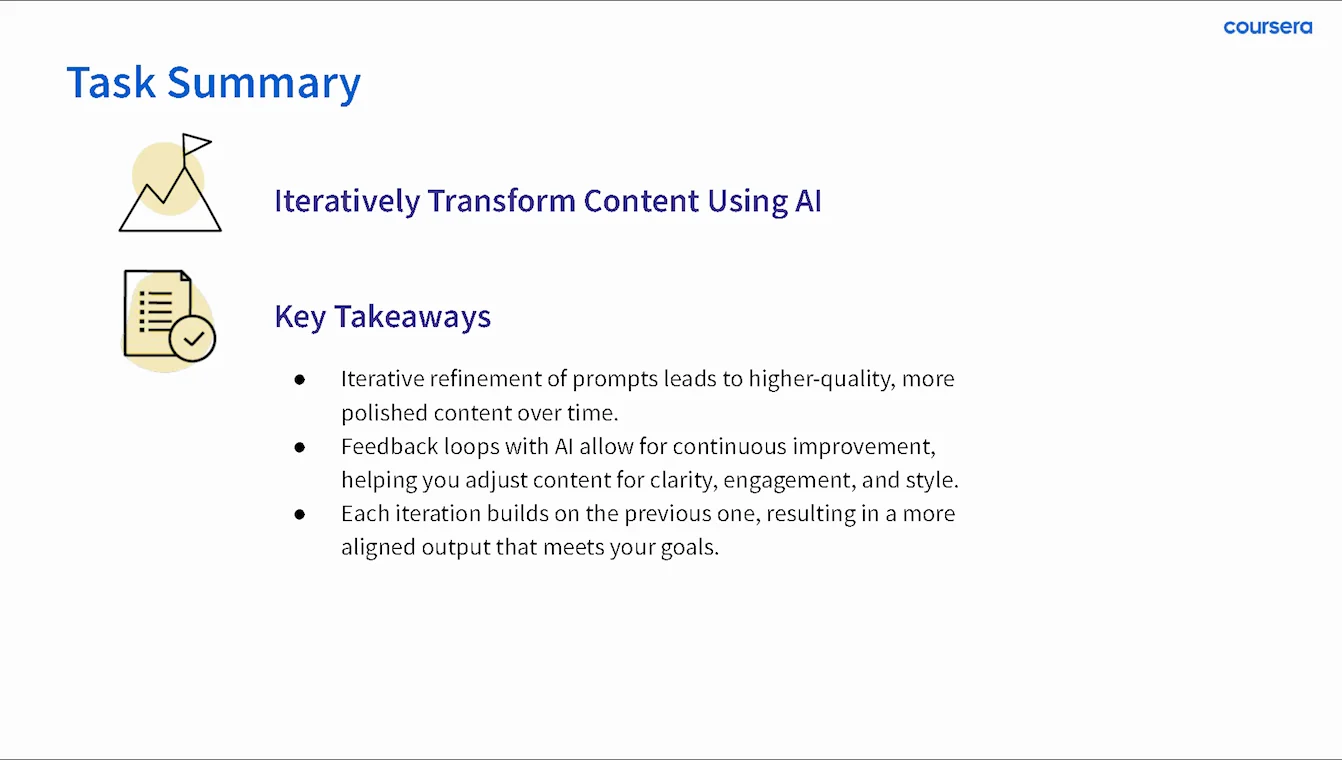
The Task 3 summary returns to drafting, reviewing, and refining against a goal. The broader project carries the work into a weekly content calendar, so prompting connects to an organized deliverable.
A collection of finished example prompts would give learners something to copy. The guided activity instead makes the initial draft, revision request, and changed output available to inspect.
Following a demonstrated sequence is easier than applying it independently. A completed lesson or enrollment count cannot tell us whether a learner can choose useful constraints for a new task.
What the work produced
The guided project is published on Coursera with my instructor attribution. It gives beginners a hands-on sequence for developing and revising AI-assisted content. The public page listed more than 4,700 enrollments when checked in September 2026; enrollment does not measure completion or learning gains.
I can turn an unfamiliar AI workflow into guided practice with a clear task, a result to examine and a next step.
Official Coursera project page and original 2024 lesson recordings. Stills preserve the historical interface and course credit; they are excerpts of my teaching material. Enrollment is not completion or a measure of learner improvement.
Tell me about the task and what a useful result would look like. We can find a concrete starting point.